01 / HISTORICAL BASIS
A large clinical experience was converted into a direct surgical comparison.
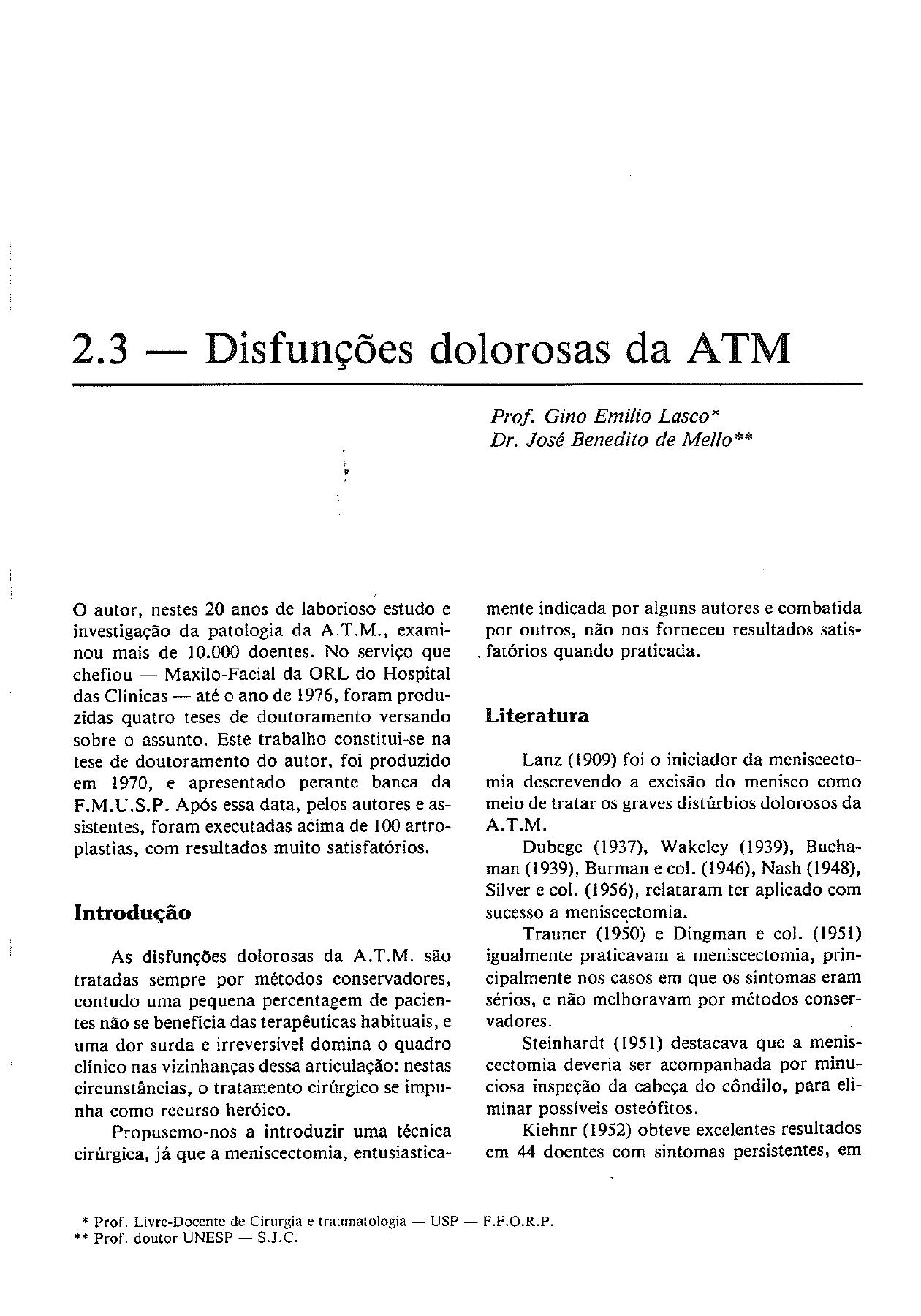
The article reports that Professor Lasco examined more than 10,000 patients during 20 years of study and investigation of temporomandibular joint pathology. It identifies the work as his doctoral thesis, produced in 1970 and presented before an examining committee at the University of São Paulo School of Medicine.
By the time of this later historical account, the authors and assistants reported performing more than 100 arthroplasties with very satisfactory results. The publication therefore connects an early comparative clinical series with a much broader accumulated surgical experience.
The terminology, diagnostic resources, anesthetic protocol, materials and postoperative regimen reflect the period in which the work was performed. They are preserved for historical education and should not be interpreted as current clinical guidance.
02 / MATERIAL AND METHOD
Twelve patients who had not improved with conservative treatment formed two surgical groups.
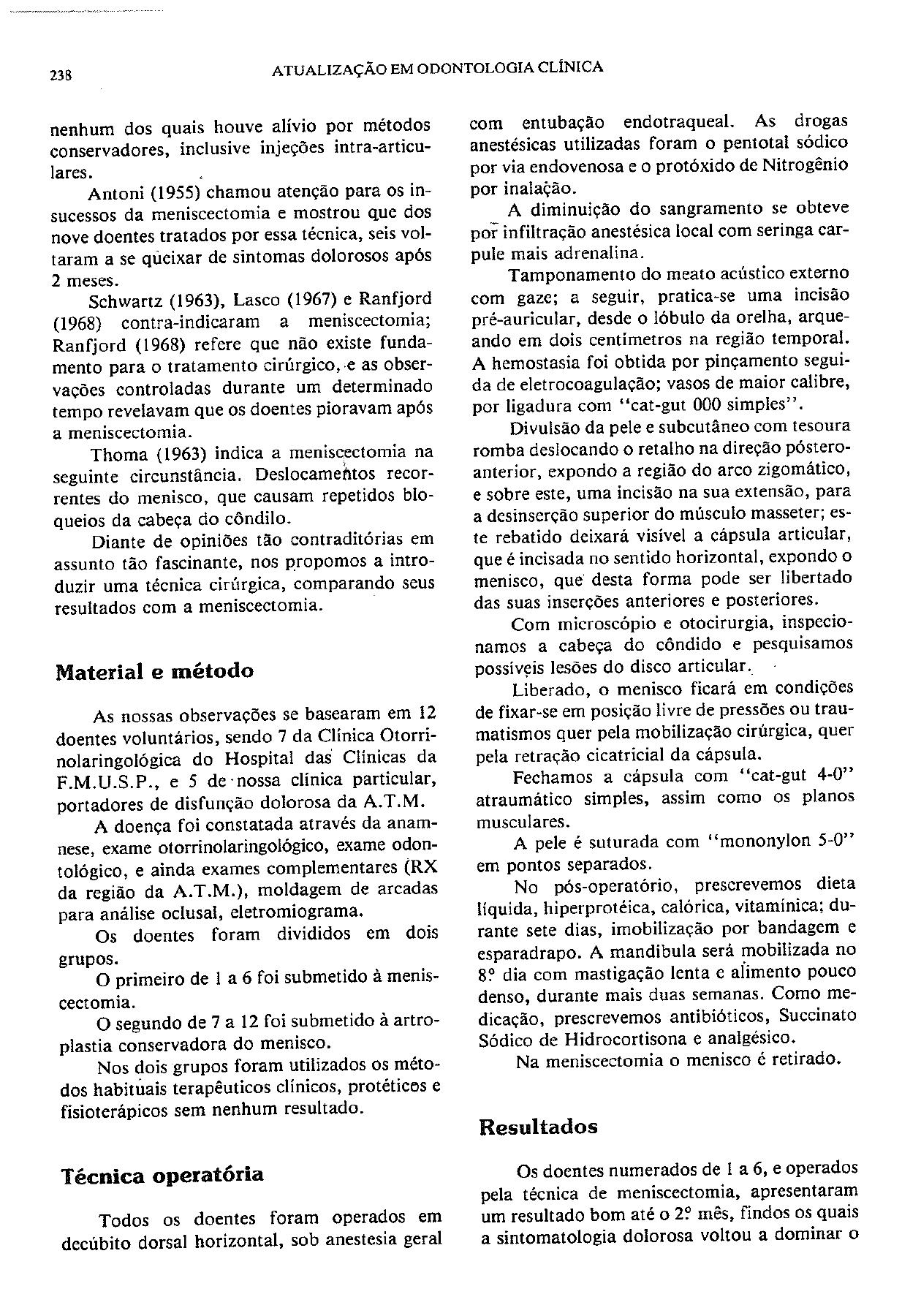
The comparative observations involved 12 volunteer patients with painful TMJ dysfunction. Seven were treated at the Otorhinolaryngology Clinic of Hospital das Clínicas, University of São Paulo School of Medicine, and five in the authors' private clinic.
Assessment included clinical history, otorhinolaryngological and dental examinations, TMJ radiographs, dental arch impressions for occlusal analysis, and electromyography. Patients 1 to 6 underwent meniscectomy. Patients 7 to 12 underwent conservative arthroplasty with preservation of the meniscus.
03 / OPERATIVE PRINCIPLE
The alternative technique released and repositioned the meniscus instead of removing it.
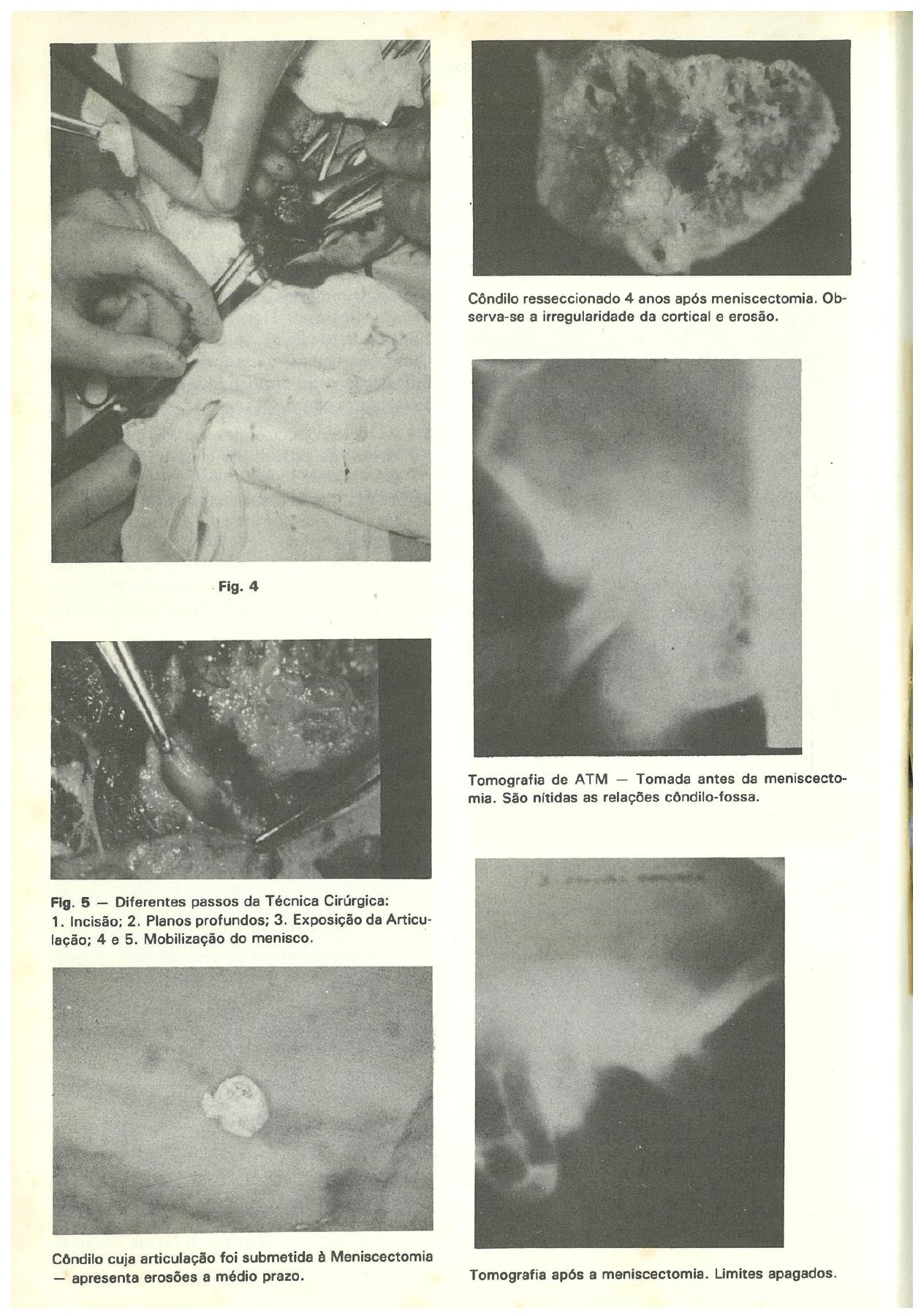
Through a preauricular approach, the team exposed the zygomatic arch, released the superior insertion of the masseter, opened the joint capsule horizontally, and freed the anterior and posterior attachments of the meniscus. Microscopic inspection was used to assess the condylar head and possible articular-disc lesions.
The released meniscus was fixed in a position intended to remain free from pressure or trauma. The capsule, muscular planes and skin were then closed. The article contrasts this conservative procedure with meniscectomy, in which the meniscus was removed.
04 / RESULTS AND CONCLUSIONS
The conservative meniscal procedure produced the more satisfactory historical outcomes.
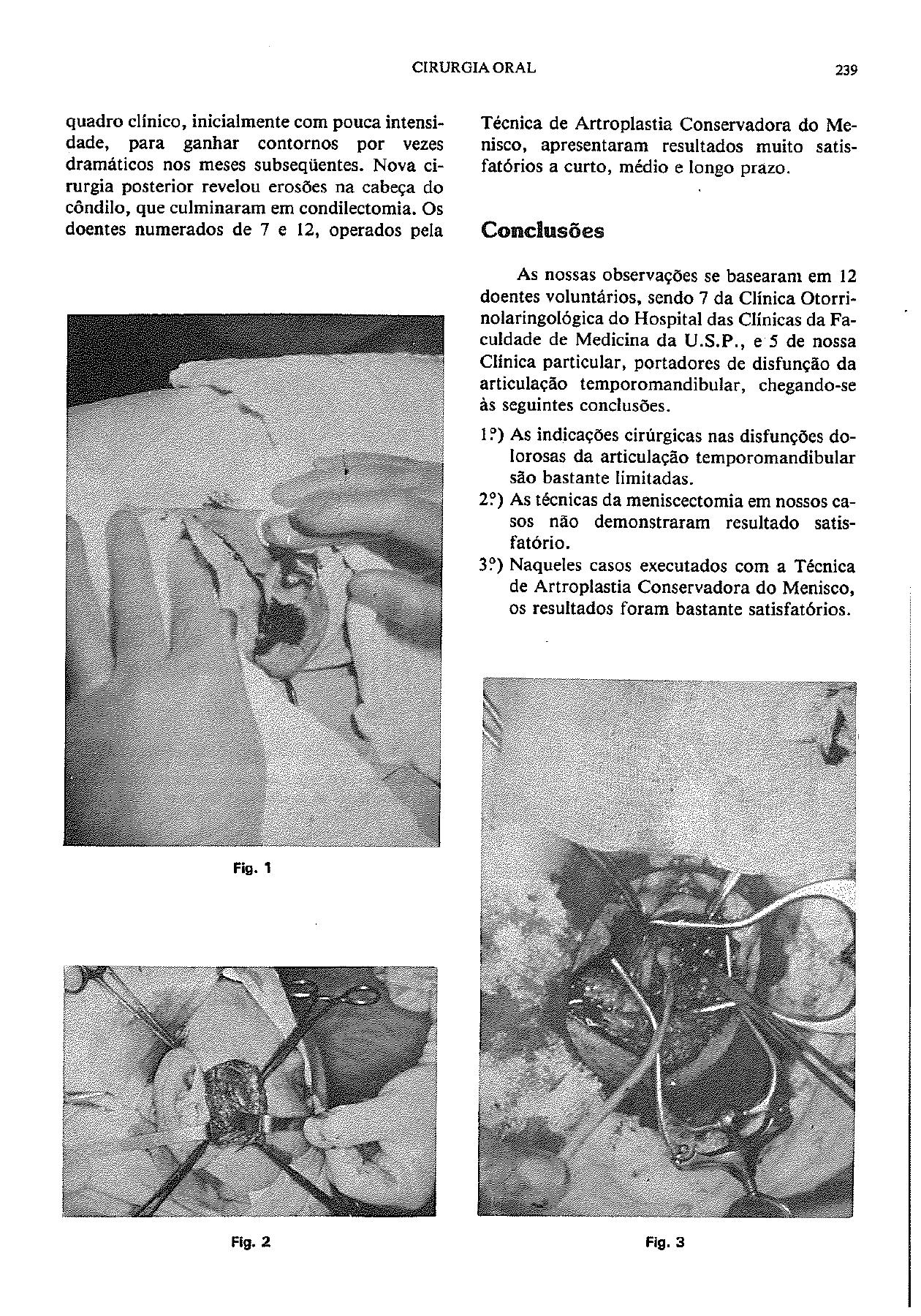
The six patients treated by meniscectomy initially had good results, but painful symptoms returned after approximately two months and sometimes became dramatic. Later surgery revealed erosion of the condylar head, ultimately leading to condylectomy.
The six patients treated with conservative meniscal arthroplasty were reported to have very satisfactory short-, medium-, and long-term results. The authors concluded that surgical indications for painful TMJ dysfunction were limited, that meniscectomy had not provided satisfactory results in their cases, and that conservative arthroplasty with preservation of the meniscus had performed satisfactorily.
05 / ARCHIVE INTERPRETATION
A preservation principle emerged before modern disc-repositioning systems.
The publication is important because it documents a deliberate move away from routine removal of the articular meniscus after unsatisfactory clinical experience. The team compared two methods and retained the tissue-preserving option when its follow-up was superior.
For contemporary readers, the enduring lesson is methodological: question an established operation when longitudinal outcomes contradict early improvement, compare alternatives directly, and preserve anatomy when the clinical evidence supports preservation.
06 / COMPLETE ORIGINAL RECORD
Every page of the supplied publication is preserved.
The following six page images reproduce the complete Portuguese article, including the introduction, literature review, material and method, surgical technique, results, conclusions, all clinical images, and the full historical bibliography.